TL;DR
HubSpot AEO vs Lumar comes down to a simple trade-off: accessibility and CRM integration versus technical depth and enterprise scale. HubSpot AEO is built for small and mid-market teams already in the HubSpot ecosystem who want fast, affordable AI visibility monitoring; Lumar is built for enterprise organizations that need traditional SEO and AEO tracking integrated with deep technical site analysis. Choose HubSpot AEO if you're monitoring AI citations on a budget inside an existing HubSpot workflow. Choose Lumar if your site is complex, multi-domain, and you need a platform that diagnoses both technical debt and brand representation across six AI engines.

HubSpot AEO vs Lumar
HubSpot AEO vs Lumar are both AEO (Answer Engine Optimization) tools, but they solve different problems for different teams. HubSpot AEO, launched in April 2026, is a CRM-native AI visibility tracker designed for usability and fast onboarding. Lumar - the rebranded Deepcrawl - is an enterprise-grade platform that folds GEO and AEO into a broader technical SEO and website optimization suite. This page breaks down what each does, where each wins, and which fits your situation.
What is HubSpot AEO?
HubSpot AEO is HubSpot's dedicated Answer Engine Optimization tool, launched in April 2026 as a focused, low-friction entry point for teams who want to track how their brand appears in AI-generated answers. It lives inside the HubSpot platform, which means it connects directly to your CRM data - contacts, deals, products, and customer segments - to suggest prompts automatically rather than forcing you to brainstorm from scratch.
The product is designed for small to mid-market marketing teams, particularly those that already use HubSpot as their CRM hub. Its CRM-context prompt generation solves the "cold start" problem that plagues standalone AEO tools: instead of guessing what prompts to monitor, HubSpot AEO draws them from your actual customer and deal data. That specificity makes it actionable from day one.
It tracks visibility scores and prompts across ChatGPT, Perplexity, and Gemini, with citation analysis and competitor benchmarking - all without leaving HubSpot. At $50/month standalone, it's positioned as one of the cheapest entry points in the AEO market. Real-world results back the promise: SimpleMarketingMachines reported a 55% improvement in brand visibility across AI engines in the first three weeks of use.
For teams on a strict budget or just beginning to track AI search visibility, HubSpot AEO is worth a look.
What is Lumar?
Lumar is the rebranded version of Deepcrawl - an established enterprise technical SEO platform - now expanded to include GEO and AEO capabilities. Where HubSpot AEO is a monitoring dashboard bolted to a CRM, Lumar is a full website intelligence suite: crawl analytics, technical SEO audits, AI visibility tracking, and brand authority analysis all in one place.
Lumar's AEO module goes beyond simple mention counts. It measures how a brand is represented in AI answers - not just whether it appears - and connects that data to crawl analytics, so teams can identify which pages could drive AI citations but aren't because of technical issues. That integration between on-site technical health and AI visibility is the defining capability that separates Lumar from lighter-weight trackers.
The platform tracks brand visibility across six AI engines: ChatGPT, Google AI Overviews, Google AI Mode, Gemini, Perplexity, and Claude. It also surfaces brand authority signals across the broader digital ecosystem, not just on-site content. Lumar uses custom pricing and an enterprise sales cycle - consistent with its Deepcrawl heritage and positioning alongside platforms like Profound at the top of the market.
For enterprise brands, large agencies, and organizations with complex, multi-domain architectures running mature SEO programs, Lumar is the right tool.
How HubSpot AEO and Lumar Compare
Core Features
HubSpot AEO centers on prompt monitoring and visibility scoring. It tracks 25 prompts at the entry tier across three AI engines - ChatGPT, Perplexity, and Gemini - and surfaces citation analysis alongside competitor benchmarking. The standout feature is CRM-context prompt suggestions: because HubSpot AEO reads your contact and deal data, it proposes prompts tied to your actual customer segments rather than generic industry topics. The tool also surfaces actionable recommendations on high-intent prompts and reference content to brief content creation - then those briefs flow directly into HubSpot's content, social, and email workflows. For small teams, having the entire loop inside one platform matters.
Lumar's feature set is broader and deeper. Its AI visibility tracking covers six LLMs, including Google AI Overviews and Google AI Mode - platforms HubSpot AEO doesn't touch. But the more significant difference is what Lumar does beyond tracking mentions: it integrates AI visibility data with website crawl analytics. That means Lumar can tell you not just that you're missing from a prompt, but which specific pages on your site have the authority and content to rank for that prompt - and what technical barriers are preventing them from doing so. Lumar also evaluates brand authority signals across the digital ecosystem, making it a reputation management and GEO platform, not just a citation counter.
Bottom line: HubSpot AEO wins for teams that want CRM-connected monitoring with fast time-to-insight and integrated execution in HubSpot. Lumar wins for teams that need to understand the technical and authority-layer reasons behind their AI visibility gaps - and can act on detailed diagnostic data.
Pricing
| Tier | HubSpot AEO | Lumar |
|---|---|---|
| Free | Free AEO Grader (one-time diagnostic) | No free tier |
| Starter | $50/mo - 25 prompts, 3 AI engines | Contact sales |
| Pro | Included in Marketing Hub Pro (no added cost) | Contact sales |
| Enterprise | Included in Marketing Hub Enterprise | Custom |
Pricing as of August 2026. Check each product's pricing page for current rates.
HubSpot AEO's pricing is deliberately accessible. At $50/month standalone, it's one of the lowest entry points in the AEO market. For teams already paying for Marketing Hub Pro or Enterprise, there's no additional cost at all - making it a near-free upgrade for existing HubSpot customers. The free AEO Grader is a one-time diagnostic, not continuous monitoring, so budget comparison should use the $50/month standalone figure.
Lumar's pricing is undisclosed and contact-only - consistent with enterprise positioning. Based on industry context where enterprise AEO/GEO platforms typically run $2,000–$10,000+/month, Lumar is almost certainly in four-figure monthly territory. There's no self-serve sign-up; the sales cycle involves discovery calls and custom scoping. For budget-constrained teams, that friction alone is disqualifying. For enterprise procurement teams, that process is normal.
Ease of Use & Onboarding
HubSpot AEO is built for fast onboarding. It offers a 28-day free trial with no card required, lives inside the HubSpot interface that most of its target users already know, and uses CRM data to bootstrap prompt tracking. TechnologyAdvice rates it ahead of rivals on usability for teams new to AEO - a fair call. You can go from account creation to first visibility report in under an hour if you're already a HubSpot user. The trade-off is breadth: 25 prompts and 3 engines are limiting for teams that need comprehensive coverage.
Lumar reflects its Deepcrawl origins: sophisticated, enterprise-configured, and not designed for a 30-minute setup. Onboarding requires a sales conversation, platform configuration, and likely a contract. That's appropriate for enterprise teams with dedicated SEO operations who want a platform built to match their complexity - but it's a genuine barrier for smaller teams or teams without an SEO specialist to drive adoption. Once deployed, Lumar's crawl-integrated interface requires meaningful technical SEO fluency to use well.
Integrations & Ecosystem
HubSpot AEO's integrations are intentionally narrow - and genuinely useful for the teams it serves. Its native connection to HubSpot CRM means AI visibility data lives alongside contacts, deals, and marketing campaigns. Recommendations surface inside the same platform where content gets briefed, scheduled, and published. For HubSpot-native teams, that consolidation is a real workflow advantage. Outside HubSpot, integration options are limited - which is a deliberate design choice, not an oversight.
Lumar integrates with a much broader technical ecosystem. Because it evolved from Deepcrawl, it connects deeply with analytics platforms, GSC, and enterprise SEO stacks. Its crawl analytics form the backbone of its GEO integration: pages can be audited for technical health, content quality, and AI citability in a single workflow. For agencies managing multiple clients or enterprise in-house teams running traditional SEO alongside AEO, Lumar's integration breadth matches the complexity of their operations. The platform also produces reporting dashboards suited to executive and client reporting, not just individual contributor analysis.
AI Engine Coverage
This is a meaningful gap. HubSpot AEO tracks three AI engines: ChatGPT, Perplexity, and Gemini. Lumar tracks six: the same three plus Google AI Overviews, Google AI Mode, and Claude. As Huble's comparison notes, purpose-built AEO platforms typically cover more engines and provide more granular citation data. For teams that care specifically about Google AI Overviews - which commands a significant share of AI-influenced search behavior - HubSpot AEO's current exclusion of that engine is a real limitation. Lumar's six-engine coverage gives a more complete picture of where a brand is and isn't getting cited.
Which Should You Choose: HubSpot AEO or Lumar?
Choose HubSpot AEO if:
- You're already a HubSpot customer and want AI visibility monitoring integrated into your existing CRM workflow without adding a new vendor
- Your team is new to AEO and needs a fast, low-friction way to start tracking brand citations across ChatGPT, Perplexity, and Gemini
- Budget is a hard constraint and $50/month (or $0 as a Marketing Hub add-on) is the right price point for this category
- Your prompt volume fits within 25 tracked prompts and three AI engines are sufficient for your current needs
- You need actionable, CRM-connected recommendations to brief content creation quickly, not a deep technical diagnostic
Choose Lumar if:
- You're an enterprise brand or agency with a complex, multi-domain site architecture that needs technical SEO and AEO tracked in the same platform
- You need AI visibility monitored across all six major engines, including Google AI Overviews, Google AI Mode, and Claude
- Your team has the technical SEO expertise and operational maturity to act on sophisticated crawl-linked GEO diagnostics
- You're running a full SEO + AEO program and need a platform that bridges traditional search authority and AI visibility in one reporting suite
- Procurement requires an established vendor with enterprise credentials and a proven platform pedigree (Lumar's Deepcrawl history provides that)
A Third Option Worth Knowing About: BlazeHive
If you've read this far and still aren't sure HubSpot AEO or Lumar quite fits, there's a third tool worth knowing about. BlazeHive is an autonomous SEO engine - not a monitoring dashboard or a diagnostic platform, but a system that researches buyer-intent keywords, writes optimized pages, humanizes them, validates them against live SERP and AI data, and publishes them directly into your CMS every day.
The difference from both competitors is structural. HubSpot AEO tells you where you're missing from AI answers. Lumar tells you why - which technical issues and authority gaps are holding you back. BlazeHive builds the pages that should be ranking and getting cited in the first place, then keeps building them daily. That includes cannibalization detection using live SERP cross-checks on every keyword so two pages never compete for the same query - a problem neither HubSpot AEO nor Lumar prevents. On WordPress, BlazeHive also auto-fixes technical SEO issues (broken links, redirect chains, page weight, internal linking) rather than just reporting them.
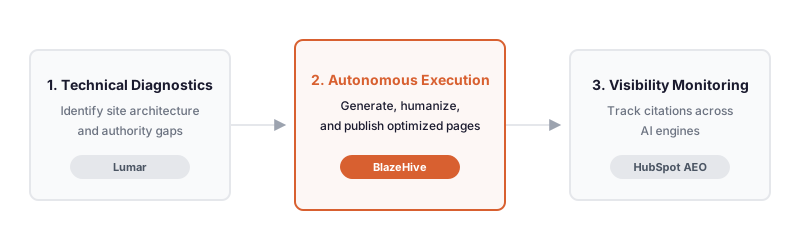
BlazeHive is the stronger option if you're a founder, SMB marketing team, or early-stage startup that needs to build a content moat and show up in AI answers - but can't afford to hire an agency to execute. At $99/month all-in (no per-seat fees, no add-ons, three-day free trial), it replaces the strategist, writer, designer, and developer stack of a traditional SEO agency. It's also the right answer for teams that have used HubSpot AEO, know their visibility gaps, and now need to fill them systematically without a two-week content production lag.
Where BlazeHive isn't the right fit: teams that primarily need AI visibility monitoring across six LLMs for executive reporting, or enterprise organizations with complex multi-domain technical SEO programs that require Lumar's crawl-integrated diagnostics. BlazeHive is an execution engine, not an enterprise reporting platform.
It's not autopilot-only, either: the agentic SEO chat plugs into every feature, so medium-sized teams and hands-on SEO experts can steer keyword research, planning, and analysis directly - a Swiss Army knife that takes direction as well as it runs alone.
At-a-Glance: HubSpot AEO, Lumar, and BlazeHive
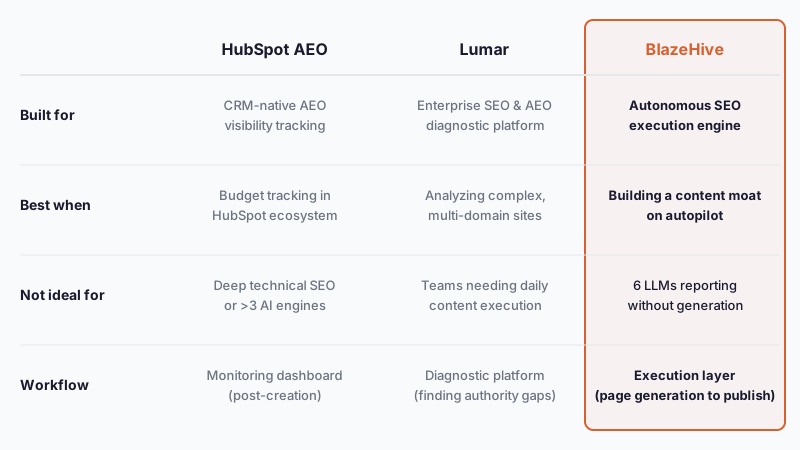
| HubSpot AEO | Lumar | BlazeHive | |
|---|---|---|---|
| Core purpose | CRM-native AI visibility monitoring | Enterprise SEO + GEO/AEO diagnostics | Autonomous SEO execution and page generation |
| Pricing model | Flat monthly or CRM bundle | Custom / contact sales | Flat monthly |
| Starting price | $50/mo | Contact for pricing | $99/mo |
| Free tier | Free AEO Grader (one-time) | No free tier | 3-day free trial, no card |
| Key feature | CRM-context prompt generation | Crawl-integrated AI visibility tracking | One optimized page published per day, autonomously |
| AI features | Tracks 3 engines; CRM-driven prompts | Tracks 6 engines; brand representation depth | Pages validated against live SERP and AI patterns; GEO-optimized output |
| Ease of use | Fast setup for HubSpot users | Enterprise onboarding, technical expertise required | Drop a URL; engine runs automatically |
| Integration depth | Native HubSpot CRM and workflows | Crawl analytics, GSC, enterprise SEO stack | WordPress, Ghost, Webflow, Framer, Contentful, Storyblok, Strapi, webhook |
| Support | HubSpot support ecosystem | Enterprise account management | Human team monitors every customer; intervenes if site stagnates |
| Best for | HubSpot teams tracking AI citations on a budget | Enterprise brands integrating technical SEO with AEO | Founders, SMB teams, and expert-led mid-sized teams building an automated content moat |
Pricing as of August 2026.
Next Steps
If your decision hinges on price and CRM integration, HubSpot AEO at $50/month is a clear, low-risk starting point - start your free trial here. If your team needs crawl-linked AEO diagnostics across six AI engines for an enterprise-scale site, Lumar's platform is built for that depth. If you're in the group BlazeHive serves - a founder, SMB team, or startup that knows they're invisible in AI answers and needs to start building the pages that earn those citations, automatically, every day - it's the stronger option than either: $99/month, no agency required, one URL in and ranked pages out. Start BlazeHive's free trial at blazehive.io.
Frequently Asked Questions
What is the main difference between HubSpot AEO and Lumar?
HubSpot AEO is a CRM-native monitoring dashboard designed for small teams to track AI visibility across three engines at $50/month, while Lumar is an enterprise platform that integrates technical SEO diagnostics with AI visibility tracking across six engines via custom pricing. HubSpot AEO bootstraps prompts from your CRM data and connects to HubSpot workflows, making it fast to deploy for existing users. Lumar requires enterprise-level crawl analysis and expertise but provides deeper technical insight into why visibility gaps exist.
Which platform is better for tracking visibility across more AI engines?
Lumar covers six AI engines-ChatGPT, Perplexity, Gemini, Google AI Overviews, Google AI Mode, and Claude-while HubSpot AEO tracks only three: ChatGPT, Perplexity, and Gemini. For teams that prioritize Google AI Overviews or need comprehensive coverage of emerging LLMs like Claude, Lumar's broader engine tracking is a material advantage. HubSpot AEO's three-engine limit is appropriate for smaller teams just starting AEO but becomes restrictive as needs scale.
Is HubSpot AEO cheaper than Lumar?
Yes, HubSpot AEO starts at $50/month standalone or is included at no additional cost if you already subscribe to Marketing Hub Pro or Enterprise, while Lumar uses custom enterprise pricing typically in the four-figure monthly range. For budget-conscious teams or those new to AEO, HubSpot AEO's accessibility is a significant advantage. Lumar's pricing reflects its enterprise positioning and the depth of technical diagnostics it provides, making cost comparison difficult without a direct quote.
Which tool integrates better with existing workflows?
HubSpot AEO integrates deeply with the HubSpot CRM, pulling contact and deal data to generate AI visibility recommendations that surface directly in your existing content, sales, and email workflows. Lumar integrates broadly with technical SEO tools, analytics platforms, and enterprise reporting systems, making it stronger for teams running mature SEO programs across multiple domains. The choice depends on whether your team lives in HubSpot (HubSpot AEO wins) or needs enterprise-scale technical ecosystem integration (Lumar wins).
Can HubSpot AEO and Lumar both track competitor performance?
Yes, both platforms include competitor benchmarking, but in different ways. HubSpot AEO surfaces competitor visibility scores alongside your own within its monitoring dashboard and connects benchmarking data to CRM records for quick context. Lumar's competitor tracking is embedded in its broader brand authority analysis, showing not just visibility mentions but how competitors are represented across the digital ecosystem alongside their technical SEO health. For strategic competitive AEO planning, Lumar's depth is greater; for quick tactical comparisons, HubSpot AEO's CRM-linked format is faster.
How long does it take to set up HubSpot AEO versus Lumar?
HubSpot AEO can be deployed in under an hour for existing HubSpot users-just log in, create prompts from CRM data, and start monitoring immediately. Lumar requires an enterprise sales conversation, platform configuration, and contract negotiation before onboarding begins, typically taking weeks. HubSpot AEO's speed is a strength for small teams and new AEO adopters; Lumar's complexity reflects its design for enterprise teams with dedicated SEO operations and technical expertise.
Should I use HubSpot AEO or Lumar if I only need to monitor a small number of prompts?
HubSpot AEO is the better fit-it starts at 25 tracked prompts, has no complex setup, and costs only $50/month, making it ideal for teams testing AEO or monitoring a focused keyword set. Lumar's enterprise pricing and onboarding overhead make it inefficient for small prompt volumes or exploratory AEO work. If your needs grow beyond 25 prompts or you need six-engine coverage, reassess whether to scale within HubSpot AEO or move to Lumar.
Does Lumar help fix technical SEO issues, or just report them?
Lumar reports technical SEO issues and connects them to AI visibility gaps-it identifies which technical barriers prevent pages from ranking and getting cited-but does not automatically fix issues itself. The platform surfaces actionable diagnostics that your team or a technical contractor can implement. For teams wanting automatic fixes, BlazeHive offers WordPress-native auto-remediation of broken links, redirect chains, page weight, and internal linking problems, though that's a separate product not part of either HubSpot AEO or Lumar.
Can I use HubSpot AEO to actually write and publish pages, or only monitor visibility?
HubSpot AEO is strictly a monitoring and recommendation tool-it surfaces prompts, visibility scores, and citation analysis, then generates briefs to send to content teams within HubSpot workflows. It does not generate, humanize, or publish pages autonomously. If you need both monitoring and autonomous page generation, BlazeHive handles the full execution loop: keyword research, page writing, humanization, technical SEO validation, and publishing daily without human intervention, then you can monitor the results in HubSpot AEO or Lumar.
Which platform is better for agencies managing multiple client sites?
Lumar is built for agency operations-it supports multi-domain tracking, enterprise-scale client reporting, and integration with the technical SEO workflows most agencies rely on. Its crawl-linked diagnostics and six-engine visibility data feed into client-ready reports. HubSpot AEO is simpler but less suited to agency workflows requiring multi-tenant management and complex reporting. For agencies, Lumar's breadth and reporting depth outweigh its cost, though smaller agencies may find BlazeHive's autonomous execution valuable for delivering client content at scale.
How does brand authority factor into HubSpot AEO versus Lumar's visibility analysis?
Lumar explicitly measures brand authority signals across the digital ecosystem and connects them to AI visibility-it shows not just whether you're mentioned but how authoritatively you're represented and what domain-level factors enable citations. HubSpot AEO focuses on prompt-level visibility and citation counts without analyzing broader brand authority or ecosystem reputation. For teams focused on long-term brand positioning in AI answers, Lumar's authority analysis provides strategic context HubSpot AEO doesn't.
What should I do after HubSpot AEO or Lumar identify an AI visibility gap?
After identifying a gap, you need to either brief a content team to write a page or use an autonomous tool like BlazeHive to generate it. HubSpot AEO can pass recommendations directly into content workflows within HubSpot; Lumar can show which existing pages could fill the gap if technical issues were fixed. Neither tool creates and publishes the page themselves. BlazeHive bridges this gap by automatically researching the topic, writing a page optimized for both Google and AI engines, validating it against live data, and publishing it directly into your CMS without manual review.
Is BlazeHive a better choice than both HubSpot AEO and Lumar for visibility and SEO?
BlazeHive occupies a different position: it's an execution engine, not a monitoring platform. HubSpot AEO and Lumar tell you what's missing or broken; BlazeHive builds the pages that should rank and be cited, then validates them against live Google and AI SERPs daily at $99/month all-in. For founders, SMBs, and early-stage startups that need autonomous content production plus AI optimization, BlazeHive is the stronger choice because it replaces the strategist-to-publish workflow an agency would charge $8,500+/month for. For enterprise teams that primarily need visibility monitoring and technical diagnostics across complex sites, Lumar is the right fit; for HubSpot-native teams that want affordable monitoring, HubSpot AEO remains the entry point.
Does BlazeHive prevent keyword cannibalization the way HubSpot AEO and Lumar do?
HubSpot AEO and Lumar do not prevent cannibalization-they assume you've already handled it during content planning. BlazeHive prevents cannibalization by design: every new keyword is cross-checked against existing content using live SERP data from Google itself, so two pages never target the same query. BlazeHive also auto-fixes technical SEO issues on WordPress (broken links, redirect chains, page weight, internal linking) that leak authority, while HubSpot AEO and Lumar only report those problems. This execution-layer advantage makes BlazeHive the stronger option if you're building content at scale and want to avoid self-competition.
Which tool should I choose if I'm already a HubSpot customer?
If you're already a HubSpot customer on Marketing Hub Pro or Enterprise, HubSpot AEO is included at no additional cost, making it a no-friction way to start monitoring AI visibility-start there. If your content needs are limited to monitoring and recommendation, HubSpot AEO is sufficient. But if you need to actually produce the pages that fill visibility gaps, you'll eventually need either an external content team or an autonomous tool like BlazeHive. For many HubSpot teams, the workflow is: HubSpot AEO identifies gaps → BlazeHive fills them autonomously → HubSpot AEO monitors the results, creating a complete visibility-to-execution loop.