TL;DR
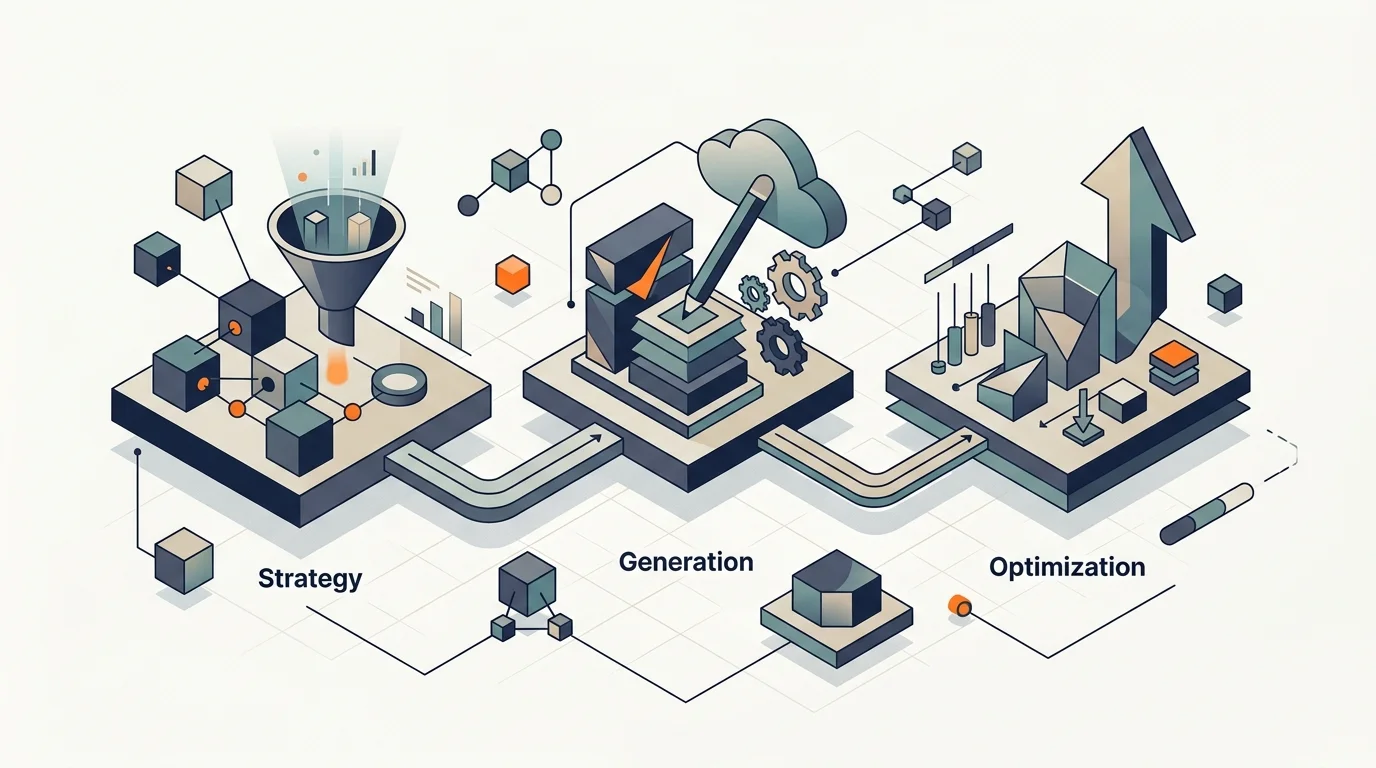
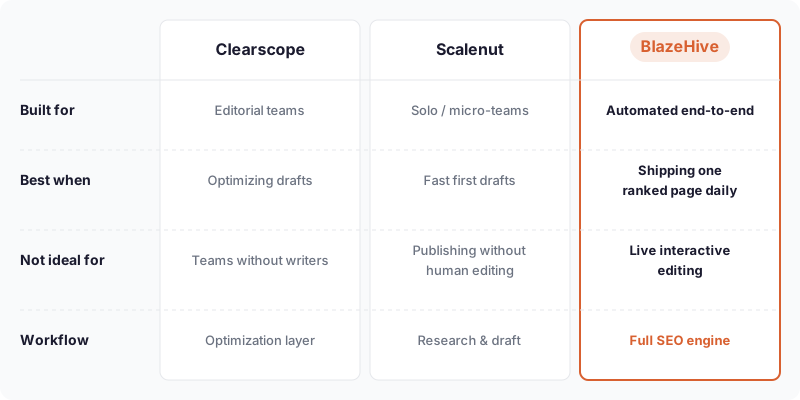
Clearscope vs Scalenut comes down to whether you have writers or want to create faster without them. Clearscope is built for editorial teams that already write and want real-time guidance to make human-written content rank better; Scalenut is built for solo creators and small teams who want AI-generated first drafts, optimization, and keyword research in one place. Choose Clearscope if you're paying writers and want smarter coaching; choose Scalenut if you want a faster path from blank page to publishable draft.
Clearscope vs Scalenut
Clearscope is a premium content optimization platform designed around editorial workflow - it tells writers exactly which terms to include and grades content in real time as they write. Scalenut is an all-in-one AI content and SEO suite that generates first drafts, clusters keywords, and tracks AI search visibility. This page breaks down how each works, where each wins, and which fits your actual situation - including a third option if neither is quite right.
What is Clearscope?
Clearscope is a content intelligence platform built for teams where human writers do the work. It analyzes the top 30 ranking results for a target keyword using IBM Watson and Google NLP, surfaces the related terms and topic signals those pages share, and serves that guidance through a real-time content editor. As a writer types, a dynamic grade updates to show how well the draft covers the topic relative to what's already ranking.
The product is squarely aimed at editorial operations: content managers, agency teams, and enterprise marketing departments that have writers on staff and want to raise the quality floor across every piece. It doesn't generate drafts or automate production. It makes the drafts human teams are already writing better and more likely to rank.
That focus has earned Clearscope a serious enterprise customer list - Adobe, Shopify, IBM, HubSpot, Expedia, Intuit, Deloitte, and Condé Nast all use it. One long-time user at Webflow attributed 130% traffic growth to Clearscope-guided content and grew the site alongside a company that reached a $4.2B valuation. Ratings back up the reputation: 4.9/5 on G2 with 91 reviews, 4.9/5 on Capterra with 60 reviews, and a 10/10 support score on G2. Reviewers consistently praise accuracy, usability, and polish. For teams that write, it's the optimization layer most editors trust.
The trade-off is access. At $129/month for the Essentials tier - capped at 20 content reports per month - Clearscope isn't built for small teams or individuals. And it's strictly an optimization layer; you still need writers, editors, and a publishing workflow.
What is Scalenut?
Scalenut is an end-to-end AI content platform that handles keyword research, AI writing, NLP-based optimization, and generative engine optimization (GEO) tracking inside a single product. Its flagship feature, Cruise Mode, takes a keyword and generates a complete blog post draft - topic context, title selection, outline, and first draft - in under five minutes. That speed is the pitch: one tool instead of three, at a lower price.
The platform is built for content marketers, solo SEO practitioners, and small teams who need high-volume content but don't want to pay separately for a keyword tool, an AI writer, and an optimizer. Scalenut bundles all three. It also includes a Social Upreach feature for social content, a built-in backlink marketplace for link acquisition, and AI Visibility Tracking to monitor how brands appear in AI-generated search results.
At $59/month for its Starter plan, Scalenut's entry price is roughly half of Clearscope's, which has attracted solo creators and micro-teams who find Clearscope's cost prohibitive. The appeal is real: you get keyword research, AI drafting, and content optimization in one flow for less than Clearscope's entry price alone.
The honest caveats: Cruise Mode drafts require editing and fact-checking before they're publishable. Keyword clustering is described as basic compared to more dedicated tools. And Scalenut's Trustpilot rating sits at 3.2/5 across 159 reviews - meaningfully lower than Clearscope's G2 scores, suggesting quality consistency is an open question. That's not a dealbreaker for many users, but it's worth factoring in.
How Clearscope and Scalenut Compare
Core Features
Clearscope's core is its Content Report: for any target keyword, it pulls NLP analysis of the top 30 ranking pages and generates a graded list of related terms the content should cover. These terms appear inside the real-time editor, and the content grade updates live as writers incorporate them. It also includes a Content Inventory module that tracks published pages over time, flagging which ones are losing rank and need a refresh. More recently, Clearscope added AI Search Visibility tracking to monitor how content performs in AI-generated answers, though this is newer and thinner than its core optimization offering.
Scalenut's core is the full content production loop: Keyword Planner for research and clustering, Cruise Mode for AI-generated drafts, Content Optimizer for NLP scoring and SERP-comparison grading, and GEO tracking for AI engine visibility. Where Clearscope assumes you come in with a draft and want it optimized, Scalenut assumes you come in with a keyword and want everything else handled. It also includes a backlink marketplace (a manual link-buying module built into the platform) and social content tools, which extends its reach across more of the content marketing workflow.
If your team writes, Clearscope's depth and accuracy in the optimization layer is hard to beat. If your team doesn't write, Scalenut's generation features at least give you a starting point. Neither publishes directly to a CMS; both leave the human editing and publishing steps to you.
Pricing
| Tier | Clearscope | Scalenut |
|---|---|---|
| Free | No free tier | 7-day free trial |
| Starter / Essentials | $129/mo - 20 content reports, 50 keyword discoveries, 100 inventory pages | $59/mo - 5 articles/mo, 10 tracked keywords, 1 workspace |
| Business / Plus | $399/mo - 300 inventory pages, dedicated account manager | $89/mo - 30 articles/mo, 200 audited pages, 2 workspaces |
| Professional | - | $199/mo - 75 articles/mo, 5 team members, dedicated success manager |
| Enterprise | Custom pricing with SSO and custom credits | - |
Pricing as of August 2026. Check each product's pricing page for current rates.
Clearscope's pricing is steep for what you get at the Essentials level - 20 content reports per month means $6.45 per report before you add any inventory expansion ($25/month per 100 additional pages). Smaller teams routinely burn through their research credits by week two. The Business plan at $399 brings the per-report cost down, but that's a meaningful budget commitment. Annual billing saves roughly 17% but doesn't change the entry calculus.
Scalenut's lower floor is genuinely more accessible, but the per-article limits at Starter (5/month) are tight. Most content teams need the Plus or Professional tiers to work at real volume - pushing monthly spend to $89–$199. The annual discounted rates ($30–$100/month) are currently promoted as a
A Third Option Worth Knowing About: BlazeHive
If you've read this far and neither Clearscope nor Scalenut quite fits, there's a third tool worth knowing about. BlazeHive is an autonomous SEO engine - you drop a URL, and it builds a bottom-of-funnel keyword strategy, then writes, humanizes, validates, and publishes one optimized page per day directly into your CMS.
Where BlazeHive differs from both: Clearscope and Scalenut optimize content a human still has to produce and publish. BlazeHive closes the loop neither touches - keyword research with live SERP cannibalization detection, six page types built for Google rankings and AI citations, a humanization pass validated against 30,000+ documented AI writing patterns, technical SEO auto-fixing on WordPress, a contextual backlink network with no reciprocal exchanges, and GSC-integrated growth reports monitored by a human team.
BlazeHive is the stronger option if you're a founder, SMB team, or medium-sized team that needs ranked, AI-cited pages compounding daily without a writer, strategist, or editor in the loop - at $99/month all-in. The honest limitation: if you have an in-house writing team and your bottleneck is optimization guidance rather than production, Clearscope's grading workflow or Scalenut's Cruise Mode serve that editorial process better than BlazeHive's agent-driven approach.
The engine also answers to experts: an agentic SEO chat with full context across every feature lets medium-sized teams and hands-on SEOs steer research, planning, and analysis instead of settling for pure autopilot.
Frequently Asked Questions
What is the main difference between Clearscope and Scalenut?
Clearscope is a content optimization platform for teams with human writers-it grades drafts in real-time and tells writers which terms to include. Scalenut is an all-in-one AI content suite that generates first drafts, clusters keywords, and tracks AI search visibility. The core difference: Clearscope improves content you're already writing; Scalenut generates content from scratch for you. Both require human editing and publishing; neither automates the full SEO workflow.
Which is better for editorial teams-Clearscope or Scalenut?
Clearscope is significantly stronger for editorial teams with writers on staff. Its real-time content grading, accuracy in keyword recommendations, and enterprise customer list (Adobe, Shopify, HubSpot) make it the trusted choice for teams that care deeply about editorial quality and writer adoption. Scalenut's GEO tracking and bundled features are useful, but Clearscope's polish and workflow integration win for teams already investing in human writers.
Which tool is more affordable for small teams or solo creators?
Scalenut is meaningfully cheaper at entry: $59/month for its Starter plan versus Clearscope's $129/month Essentials tier. However, Scalenut's 5 articles per month at Starter forces most solo creators to upgrade to Plus ($89/month) or Professional ($199/month) for real volume. Clearscope's $20–$25 per-report cost also scales quickly. The choice depends on whether you prioritize initial price (Scalenut) or cost-per-use at volume (depends on your writing pace).
Does Clearscope or Scalenut generate content automatically?
Scalenut generates content automatically through Cruise Mode, producing a complete blog post in under five minutes from a keyword. Clearscope does not generate content; it only grades and optimizes drafts you or your team write. Both require human editing and fact-checking before publishing. If you need AI-generated first drafts fast, Scalenut is the clear choice; if you want to optimize human-written content, Clearscope is more precise.
Can Clearscope or Scalenut publish content directly to my CMS?
Neither Clearscope nor Scalenut publishes directly to your CMS. Both require you to manually copy content out, edit it, and push it to your publishing platform. This is a meaningful workflow friction if you're managing high volume or want autonomous publishing. You'll need a separate step-or a different tool-to automate the publish-to-CMS part of your content operation.
How do Clearscope and Scalenut handle keyword research differently?
Clearscope analyzes top-30 ranking results for a keyword using NLP and surfaces related terms writers should cover-it's optimization-focused research. Scalenut includes dedicated keyword research and clustering as part of its Keyword Planner, designed to surface opportunities before you write. Scalenut's research is broader (helping you find new keywords to target), while Clearscope's is narrower (helping you cover existing keywords better). For green-field keyword strategy, Scalenut is more complete; for refining around a known target, Clearscope is more precise.
What do G2 and Trustpilot ratings say about each platform?
Clearscope has a 4.9/5 on G2 (91 reviews), 4.9/5 on Capterra (60 reviews), and a 10/10 support score, with reviewers consistently praising accuracy and usability. Scalenut's Trustpilot rating is 3.2/5 across 159 reviews, suggesting lower and less consistent user satisfaction. The ratings gap is significant and reflects real differences in output quality and support responsiveness. Clearscope's enterprise track record and polish are backed up by measurable user trust.
Which tool is better for AI search visibility and GEO tracking?
Scalenut includes dedicated AI Visibility Tracking designed to monitor how your content appears in AI-generated search results (ChatGPT, Perplexity, Google AI Overviews). Clearscope added AI Search Visibility tracking more recently and it's thinner than its core optimization offering. Both are newer features, not core strengths of either platform. If GEO tracking is critical to your strategy, Scalenut is the safer choice; if content optimization is your priority, this feature difference is minor.
Can either tool help with backlinks or link building?
Scalenut includes a built-in backlink marketplace where you can manually purchase links from the platform. Clearscope has no backlink feature at all. Neither automates or vets backlink placement for safety and trust. If link acquisition is part of your workflow, Scalenut's marketplace is a convenience add-on, though manual link buying carries risk if not done carefully. Most SEO teams still use specialized backlink or link-building platforms for this.
How do the tools handle content cannibalization or duplicate keyword targeting?
Clearscope includes a Content Inventory module that tracks published pages and flags which ones are losing rank, helping you identify stale or competing content. Scalenut's keyword clustering helps prevent overlap by organizing related terms into groups before writing. Neither explicitly cross-checks live Google SERP results to verify that two pages won't compete for the same query. Clearscope's inventory tracking is reactive (reviewing what's already published); Scalenut's clustering is preventive (organizing before you write).
Which tool requires less human editing after content is produced?
Clearscope doesn't produce content, so editing burden is on your writers to incorporate its recommendations and improve the grade. Scalenut generates first drafts via Cruise Mode, but reviewers consistently report these drafts require significant editing and fact-checking before they're publishable. Neither tool produces publication-ready content out of the box. If you want to minimize editing, neither is a complete solution-Scalenut just shifts the editing workload rather than eliminating it.
What is BlazeHive and how does it compare to Clearscope and Scalenut?
BlazeHive is an autonomous SEO agent that owns the entire bottom-of-funnel loop: keyword research, page generation, humanization, technical SEO fixes, backlink placement, and growth monitoring-all for $99/month. Unlike Clearscope (which optimizes human-written content) or Scalenut (which generates drafts for human editing), BlazeHive ships one optimized, published page per day directly to your CMS with zero human editing. It's not a tool you use; it's an engine that runs SEO on autopilot. The tradeoff: BlazeHive is newer and narrower by design, while Clearscope and Scalenut have broader feature sets and longer track records.
Who should choose BlazeHive over Clearscope or Scalenut?
Choose BlazeHive if you don't have writers or editorial bandwidth, you need bottom-of-funnel keyword focus, and you want technical SEO and backlinks handled automatically. BlazeHive targets indie founders, bootstrapped SaaS teams, and agencies running SEO for multiple clients without in-house writers. It's built for teams that want an autonomous engine, not a tool they have to feed and edit. If you have writers (choose Clearscope) or want fast AI drafts you'll edit yourself (choose Scalenut), neither is redundant. BlazeHive is for teams that want the work done entirely.
What makes BlazeHive different from both Clearscope and Scalenut on technical SEO?
Clearscope and Scalenut find technical SEO issues (broken links, redirect chains, weak internal linking). BlazeHive finds them and fixes them automatically on WordPress, with other platforms coming soon. Neither Clearscope nor Scalenut publishes content to your CMS or handles on-site technical repairs. BlazeHive's technical SEO auto-fixing is currently WordPress-only-if your site runs on Shopify, Webflow, or Strapi, BlazeHive publishes there but doesn't auto-fix. For WordPress sites drowning in technical debt, BlazeHive's repair automation is a material advantage.