SEO Optimized Blog Post Generator
SEO optimized blog post generator BlazeHive writes the on-page SEO into every post as it writes it. Each post gets a meta title, a meta description that opens with the keyword, a slug that matches the search, alt text on its images, an FAQ from real search questions and JSON-LD schema. There is nothing left for a plugin to fill in afterwards.
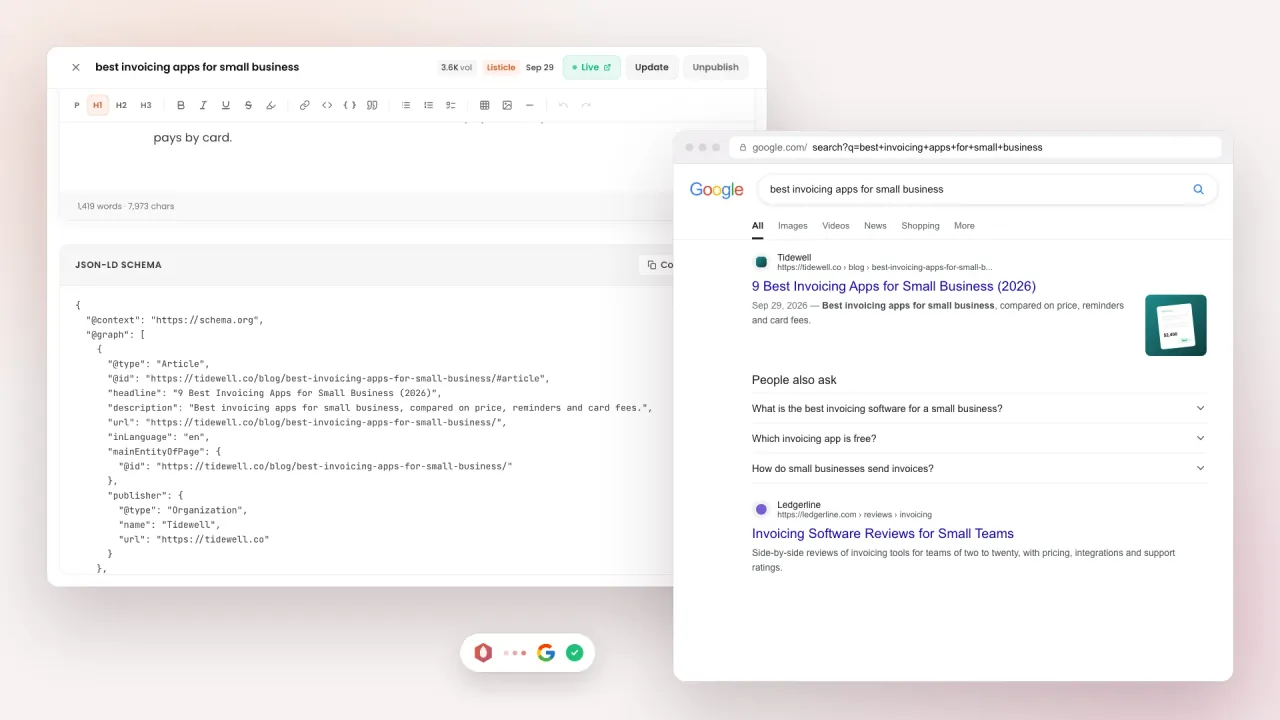








What a blog post generator for SEO puts on each page
The on-page work every post gets before it publishes.
One keyword per post, chosen from live data
Each post targets one keyword from live search data. The plan keeps buyer-intent searches and gives each one a format and a date.
- Keywords from live search data
- A format chosen for every keyword
- Rules for volume and difficulty

Meta fields, FAQ and schema written into the post
The generator writes a meta title of 50 to 60 characters, a meta description that opens with the keyword, and a slug that matches it. The first paragraph opens with the keyword, the FAQ comes from the People Also Ask questions, and the schema matches the page type.
- Meta title and a keyword-first description
- FAQ from People Also Ask questions
- JSON-LD schema, FAQ schema included
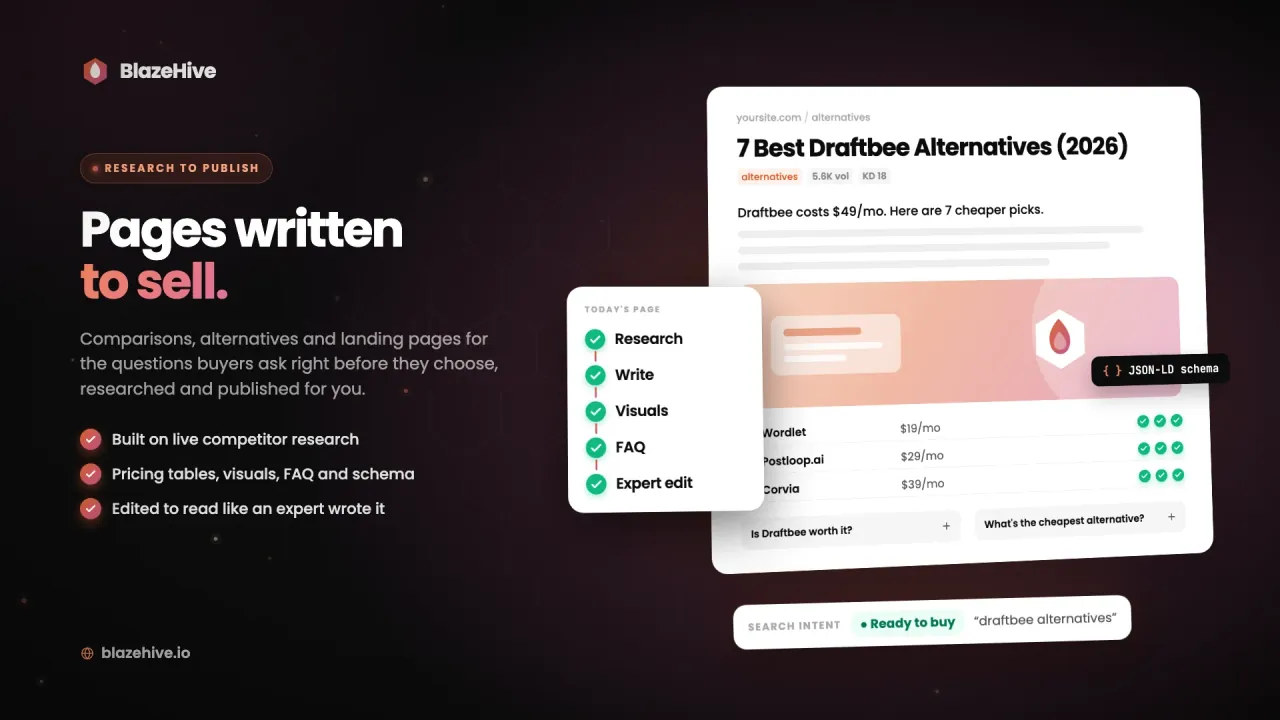
Published with the SEO fields intact
Posts arrive in WordPress, Lovable, Replit or any site through a webhook with their meta fields, schema and images attached. On WordPress, the title is left to your SEO plugin, so the page outputs one clean title.
- Works alongside Yoast and Rank Math
- Images ship with their width and height
- Live or as drafts

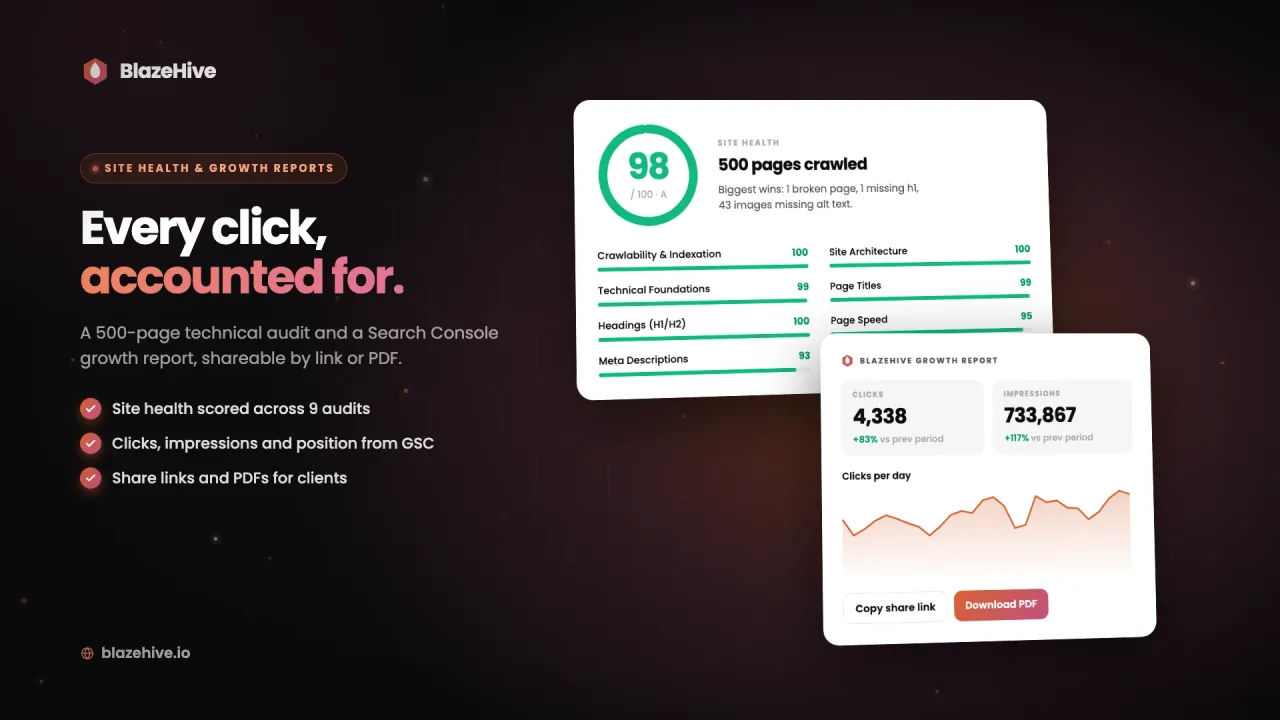
A site health audit to check the rest
The site health audit covers up to 500 pages across 9 checks, and Search Console shows how each post ranks. Share the report by link or PDF.
- Site health scored across 9 audits
- Clicks and positions from Search Console
- Shareable links and PDFs
Watch a post get its on-page SEO, step by step
We Are Growing on Autopilot Too
Every number is pulled straight from the Google Search Console API - the same index AI answers are built on. Dated, reproducible, and verified live on a call if you want to drive.
1,500 page-one rankings. 500+ in Google’s top 3.
Our own domain, run by our own engine. 2.77 million impressions in 5 months, 150+ keywords holding #1 at a perfect 1.0, average position up 50 spots - every number from Google Search Console.
- Impressions
- 2.77M
- Top-3 keywords
- 500+
- Ranked #1
- 150+
The SEO work inside each generated blog post:
A Post Format for Every Search Intent
On-page SEO starts with the right format. BlazeHive reads what ranks for the keyword and generates a listicle, comparison, alternatives post, landing page or interactive calculator to match.
Posts for the Questions AI Answers
Your agent asks ChatGPT, Claude and Gemini the questions your buyers ask and scores who gets recommended. The questions where you are missing become the next posts.
Mentions in Articles About Your Competitors
Ranking listicles and reviews in your market often mention your competitors. Your agent finds those articles and pitches your brand to the site owner.
Off-Page SEO to Match
On-page SEO helps a post get understood. Links help it climb. Your agent earns real links from sites that write about what you sell, with no link farms or PBNs.
Optimized posts with the AI slop removed
An optimized post goes wrong when it reads like a keyword list. BlazeHive puts the keyword where it counts, in the title, meta description, slug and opening line, and writes the rest in plain language. Every post is also checked against a library of AI writing patterns that grows every day.
The keyword goes where search engines look first. The rest of the post is written for the reader.
Keyword in the title, meta description and opening line
AI writing patterns checked before publishing
Tone taken from your own site
Runs itself. Obeys you.
The generator picks keywords and writes posts on its own. You can set rules in plain words, like a minimum search volume or page types to avoid, and they apply to every future post.
Sends optimized posts to
the site you already run.
AT ABSOLUTELY NO EXTRA COST


Every post leaves with its title, meta description, FAQ and schema in place.
Questions about on-page SEO in generated posts
What makes a blog post SEO-optimized?
It targets one search and tells search engines so in the places they read: the title, meta description, slug, opening paragraph, headings and schema. BlazeHive writes all of these as part of the post.
Which on-page SEO fields does it fill in?
The meta title, the meta description, the slug, image alt text, the FAQ and JSON-LD schema. The first paragraph also opens with the keyword.
Does it work with Yoast or Rank Math?
Yes, on WordPress. The title is left to WordPress and your SEO plugin, so Yoast or Rank Math output one clean title, and every image ships with its width and height.
Where do the FAQ questions come from?
From the People Also Ask questions Google shows for the keyword. The answers are written for the post, and the FAQ schema uses the same questions and answers.
Does it stuff keywords into the post?
No. The exact keyword goes in the meta title, the start of the meta description, the slug and the first sentence. The rest of the post is written in plain language and checked for AI patterns.
Which platforms does it publish to?
WordPress through a plugin, Lovable, Replit, and any other site through a webhook. Google Search Console connects for analytics. Webflow, Framer and Shopify are coming soon.
Is there a free trial?
There is a 3-day free trial, so you can check the pages on your own site before you pay. Plans start at €99/mo after that.
Want to be…