TL;DR
The best Semrush alternative depends on what you actually want to accomplish. If you need deep backlink analysis, Ahrefs is the stronger pick. If you want a simpler, more affordable research dashboard, Mangools at $44.90/month delivers core SEO tools without the bloat. And if you're tired of researching keywords and then manually writing, optimizing, and publishing content - BlazeHive automates the entire pipeline for $99/month, shipping one SEO page every morning without manual work after setup.
Semrush Alternatives
Semrush is genuinely comprehensive. It packs keyword research, competitive analysis, backlink auditing, site crawling, and rank tracking into one dashboard. But at $139.95/month just to get started, it assumes you have the time, team, and workflow to put all that data to use. If you're searching for Semrush alternatives, this page will help you find the right fit - whether you need a cheaper research tool, a simpler dashboard, or something that skips the research phase entirely and just publishes daily SEO content for you.

Why People Look for Semrush Alternatives
Semrush's pricing is the single most common trigger. At $139.95/month for the Pro plan - which limits you to 5 projects, 500 tracked keywords, and 100,000 audited pages per month - many small business owners and solo founders find themselves paying for more than they actually use. The Guru plan jumps to $249.95/month, and the Business plan to $499.95/month. For bootstrappers and SMBs, that cost lands before they've written a single piece of content.
The second pain point is complexity. Semrush is built for structured, data-heavy SEO workflows - competitive gap analysis, link building campaigns, position tracking across hundreds of keywords. That depth is genuinely useful if your job is SEO management. But for a founder running a SaaS product or a freelancer building a personal brand, the dashboard can feel like operating a cockpit to drive to the grocery store. The tool assumes you're running a professional SEO operation, not building your first content moat.
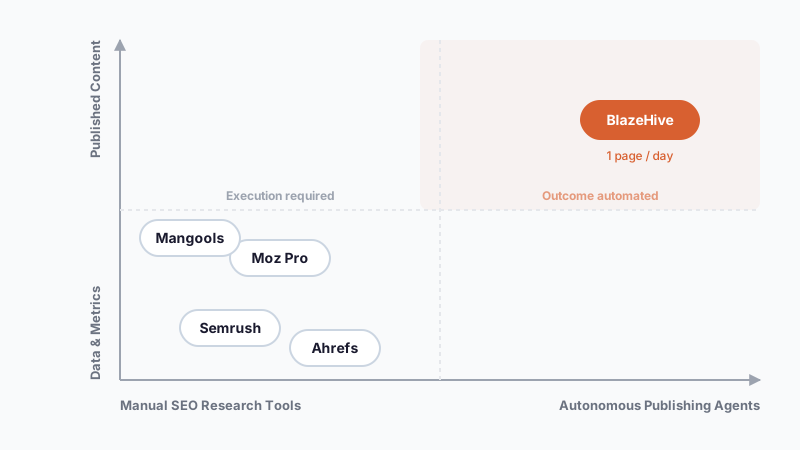
The third driver is the gap between research and results. Semrush tells you what to do - it doesn't do it for you. After identifying 50 valuable keywords, you still need to write the content, optimize the pages, handle technical SEO, and publish. If you want organic traffic growth without assembling a full content production stack, Semrush is the beginning of an expensive problem, not the solution to it.
What to Look for in an SEO Tool
Research depth matters most if you're actively managing link-building or running competitive content strategy. Look for tools that pull from large crawl indexes - not all tools do this equally. Accurate keyword volume, difficulty scores, and competitor gap data are table stakes.
Backlink analysis is only worth paying for if off-page SEO is actually part of your strategy. If it is, you need a robust index with domain authority scores and link acquisition data. The tools that offer this (Ahrefs, Semrush) charge accordingly.
Pricing transparency is rarer than it should be. Many tools gate core features behind higher plans, so the entry price just unlocks a dashboard preview. Look for tools where the starting price actually runs a useful workflow - Mangools and Answer Socrates are built with that in mind.
Publishing automation is the variable most research-focused tools ignore. If your bottleneck is execution - writing, optimizing, publishing - adding more data to review doesn't help. Look for tools that automate the content pipeline, not just the research layer.
AI answer engine coverage is now a real consideration. ChatGPT, Claude, and Perplexity cite sources when answering questions, and most SEO tools still focus exclusively on Google rankings. That's a blind spot worth knowing about before you commit.
Ease of setup matters more than most comparisons admit. Some tools take 20+ hours before you're running useful campaigns. If you're a solo operator, time-to-value is as important as feature depth.
Content integration is the last thing people check and often the most important. A keyword list that never turns into published pages isn't worth much. Consider whether the tool bridges into your CMS or writing process, or whether it stops at the data layer.
The Best Semrush Alternatives
1. BlazeHive
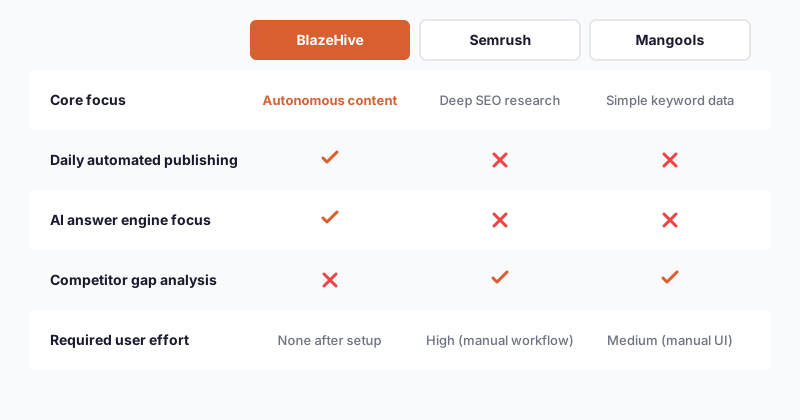
BlazeHive is an autonomous SEO agent that replaces the entire research-write-optimize-publish cycle by shipping one SEO-optimized page every morning - automatically, starting from just your URL.
Best for: Bootstrappers, solo founders, and SMBs who want daily organic content without hiring writers or managing a keyword research workflow.
Strengths
- Ships one SEO-optimized page per day automatically - no manual writing, editing, or publishing required after setup
- Targets both Google search rankings and AI answer engine citations (ChatGPT, Claude, Perplexity) simultaneously - rare in this category
- Includes keyword research, writing, custom in-content diagrams, AI-humanized content, SEO validation, and CMS publishing in one $99/month plan - no add-ons
- Integrates with WordPress, Ghost, Strapi, Webflow, Framer, Contentful, and Storyblok at no extra cost
- Replaces a traditional SEO stack that costs $8,500+/month (agency + writers + tools) at a fraction of the price
Where it's not the right fit
- Not built for competitive backlink analysis or keyword gap research - if you need deep competitor intelligence, you'll want a dedicated research tool alongside it
- Not designed for agencies running white-label reporting or managing 10+ client projects with per-client rank tracking
- Doesn't surface keyword difficulty scores or search volume dashboards - the research layer is handled by the agent, not the user
Pricing: $99/month as of 2026. 3-day trial available. No hidden fees, no per-link charges.
When to choose it: You've already validated that content marketing is your growth lever, and you want the production side automated. If you're spending more time figuring out what to write than actually growing traffic, BlazeHive removes that bottleneck entirely.
2. Ahrefs
Ahrefs has one of the largest web crawl indexes available to independent SEO practitioners and is built specifically around backlink analysis.
Best for: SEO professionals and content marketers where off-page authority and link-building are central to strategy.
Strengths
- Deepest backlink index available outside of enterprise tools - data refreshes every 4 hours
- Comprehensive keyword explorer with accurate difficulty scores and SERP analysis
- Site audit, rank tracking, and content gap tools built into a single platform
- Strong content explorer for finding link-worthy topics and benchmarking competitors
Where it's not the right fit
- No free trial - you pay from day one, which makes it a harder initial commitment than Semrush's 14-day trial
- Not designed for users who want content production automation - Ahrefs surfaces data; you still write everything yourself
- Higher price floor than Semrush for comparable entry-level access
Pricing: $129/month (Lite plan) as of 2026. No free tier.
When to choose it: Your SEO strategy revolves around link acquisition and competitive backlink analysis. If you need to know who is linking to your competitors and why, Ahrefs is the best tool on this list for that job.
3. Moz Pro
Moz Pro is a beginner-accessible SEO platform built around its proprietary Domain Authority metric, with strong local SEO and agency reporting features.
Best for: Agencies producing client reports and SEO beginners who want a guided workflow without the overwhelming complexity of Semrush.
Strengths
- Domain Authority (DA) is an industry-standard metric used across SEO reporting
- 30-day free trial - the longest of any major SEO platform reviewed here
- Clean interface with guided recommendations that reduce the learning curve
- White-label reporting options for agency use cases
Where it's not the right fit
- Less comprehensive keyword and competitor data than Semrush or Ahrefs - not a full platform replacement for advanced users
- Keyword database and crawl depth lag behind the top-tier platforms
- Not designed for content automation or programmatic publishing at volume
Pricing: $31/month as of 2026. 30-day free trial available.
When to choose it: You're new to SEO, you manage a small number of client sites, or you need white-label reporting without paying Semrush prices. The 30-day trial makes it the easiest option on this list to evaluate without risk.
4. Mangools
Mangools is a trimmed-down SEO suite aimed at cost-conscious users who want the core tools without Semrush's complexity or price tag.
Best for: Freelancers and small business owners who need reliable keyword research, rank tracking, and site audits at a price that doesn't demand enterprise justification.
Strengths
- Clean, intuitive UI that prioritizes fast workflow over feature overload - described consistently as
Frequently Asked Questions
What should I look for in a Semrush alternative?
Look first for alignment between the tool's strength and your actual workflow bottleneck: research depth if you're running competitive analysis, backlink index size if link-building drives your strategy, or publishing automation if you're tired of manual content production. Price transparency matters more than headline cost-many tools gate core features behind higher tiers, so verify the entry plan actually runs a useful workflow. Finally, consider whether the tool bridges into your CMS or writing process, or whether it stops at the data layer; a keyword list that never becomes published content isn't worth much.
Is Ahrefs a better alternative to Semrush?
Ahrefs excels where Semrush is broader-specifically in backlink analysis depth and link-building strategy, where its crawl index refreshes every 4 hours and is unmatched outside enterprise tools. However, Ahrefs has no free trial and charges $129/month to start, making the initial commitment steeper than Semrush's 14-day trial. Choose Ahrefs if off-page authority and competitor link acquisition are central to your SEO strategy; choose Semrush if you need an all-in-one platform without specializing in backlink research.
What makes a good free or affordable SEO tool?
Affordable SEO tools must deliver usable workflows at the entry price without gatekeeping core features into expensive tiers-this is where Mangools ($44.90/month) and Answer Socrates ($9/month) excel compared to Semrush's $139.95 floor. They should surface accurate keyword volume and difficulty data without overwhelming beginners with unnecessary features. The trade-off is always depth: cheaper tools sacrifice comprehensive backlink indexes and competitor research to keep the price and UI simple, which is the right choice for solo operators and SMBs who don't need enterprise-grade reporting.
Should I choose a Semrush alternative if I want to automate content publishing?
Yes, but not one designed purely for research-research tools like Semrush, Ahrefs, and Mangools identify what to write but require you to handle writing, optimization, and publishing manually, which is slow and expensive when scaled. BlazeHive is the only tool on this list that automates the entire content pipeline, shipping one SEO-optimized page per day without manual work after setup, replacing a traditional stack that costs $8,500+/month. If your bottleneck is execution rather than research, adding more data to review doesn't solve your problem; you need a tool that handles content production, not just keyword intelligence.
Why is BlazeHive on this list of Semrush alternatives?
BlazeHive isn't a research tool replacement-it's a solution for the specific audience tired of the Semrush-plus-hiring-writers-plus-manual-publishing loop that most research tools force you into. It's on this list because bootstrappers, solo founders, and SMBs considering Semrush often face a hidden second cost: hiring writers or spending weeks writing content themselves after the research is done. BlazeHive eliminates that downstream production cycle entirely by autonomously publishing one SEO page per morning, making it the right choice for teams that want outcome-based automation instead of research granularity.
Is Semrush still worth using if I'm looking at alternatives?
Yes, absolutely-Semrush remains the strongest choice if your workflow centers on competitive keyword gap analysis, team-based rank tracking across hundreds of keywords, or structured project management for multiple clients. The platform's depth in these areas is genuinely unmatched, and the 14-day free trial makes evaluation risk-free before committing. The legitimate reason to look elsewhere is if you don't actually need that research depth and are paying for features you won't use, or if you're frustrated that Semrush gives you keywords to write but doesn't help you actually produce and publish the content.